
How can we help?
-
Asset
-
-
- Articles coming soon
-
- Articles coming soon
-
Facilities
-
Failures
-
- Articles coming soon
-
-
Group
-
Help
-
- Articles coming soon
-
- Articles coming soon
-
- Articles coming soon
-
- Articles coming soon
- Articles coming soon
-
-
Main Client Window
-
- Articles coming soon
-
- Articles coming soon
-
- Articles coming soon
-
- Articles coming soon
-
-
Scoreboard
-
- Articles coming soon
-
- Articles coming soon
-
- Articles coming soon
-
- Articles coming soon
-
-
Tools
-
-
- Articles coming soon
-
-
Window
-
- Articles coming soon
-
- Articles coming soon
-
- Articles coming soon
- Articles coming soon
-
Failure History Screen
Posted
Updated
ByTheta Team
Print Objective:
Explain what a user is seeing on the Failure History Screen.
Rights Needed:
☐Admin ☐ Admin Lite ☐Well Admin ☐Well Control
☐Well Config ☐Well Config Lite ☒Read Only
Versions:
XSPOC: 3.1, 3.2
Purpose:
Designed to give the user access to a specified list of well failure records.
Instruction:
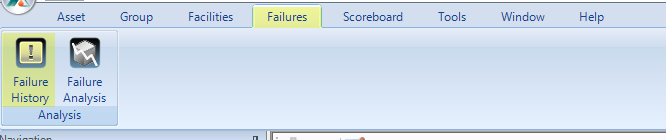
- Open XPOC Client
- From the navigation panel locate and select the Failures Tab
- Click Failures>Failure History
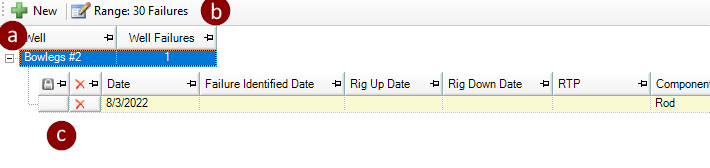
- Select a well from the Navigation panel on the left and the Failure History Screen opens and contains the following:
- New Icon – allows users to enter a new Failure, if they have the needed rights in XSPOC
- Range Filter
- Display Failures by Date Range
- Display Failures by number of Failures
- Failures Grid displaying
- Well Name
- Number of Well Failures
- List of Failures
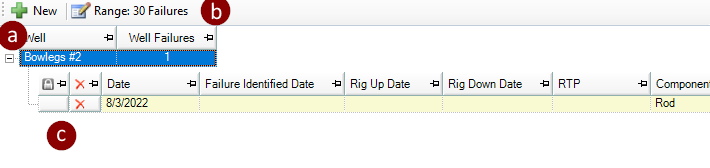
- Select a Group from the Navigation panel on the left and the Failure History Screen opens and contains the following:
- New Icon – allows users to enter a new Failure, if they have the needed rights in XSPOC
- Range Filter
- Display Failures by Date Range
- Display Failures by number of Failures
- Failures Grid displaying
- Well Names
- Number of Well Failures for each well
- On the bottom right there are two window control icons.
- The lock icon allows the user to lock the screen.
- The arrow icon allows the use to float the window and move it to other screens or areas of the same computer screen.
Table of Contents